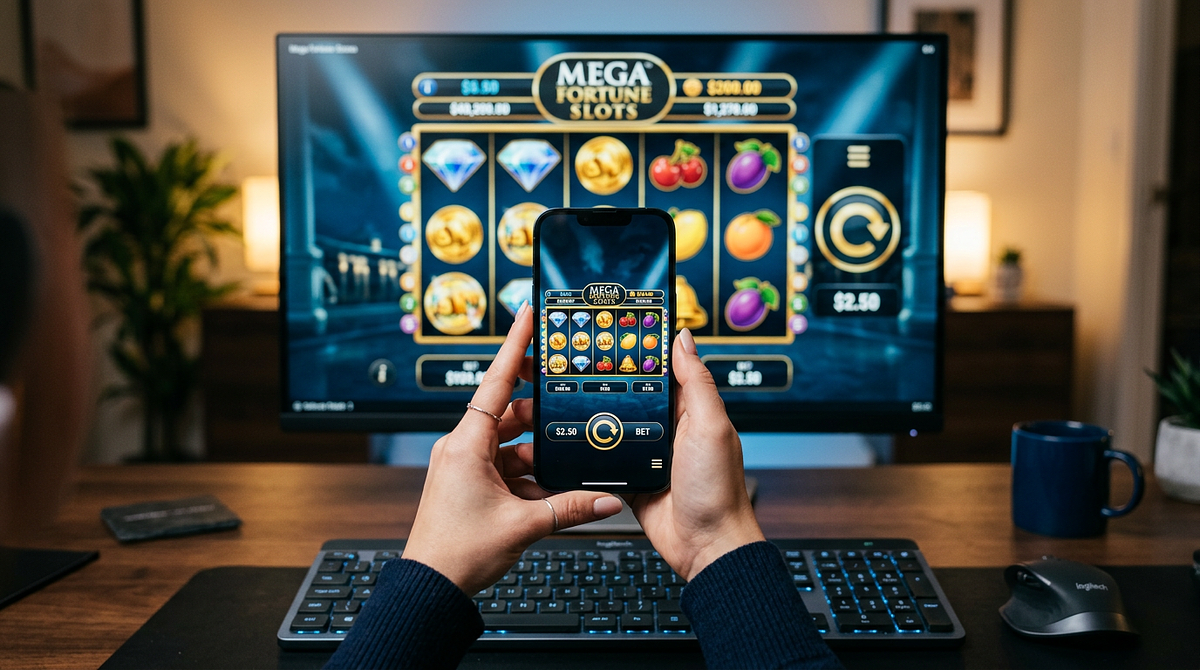
Mobile slots vs desktop slots is a practical comparison that comes down to how each platform affects your playing experience, not your odds or outcomes. This page covers the main differences between the two: controls and interface, screen size, game availability, and security. Each area looks at what you actually run into as a player when you pick one platform over the other. By the end, you’ll have enough to decide which setup fits the way you like to play.
How the Two Platforms Differ at the Interface Level
The most immediate difference between mobile and desktop slot play isn’t the game itself. It’s the physical relationship between you and the screen. Two things define that relationship: how you trigger actions, and how the interface is laid out to fit the screen you’re using. Both shape how a session feels before you ever think about graphics, game selection, or fairness. The two sections below cover each one.
Touch Input Versus Pointer Input
Swapping a mouse for a fingertip changes the margin for error on every tap. Spin buttons, stake selectors, and payline toggles are bigger targets on mobile, but your finger covers them as you tap, and accidental hits on nearby controls (especially the max bet or autoplay shortcut) happen more often than mis-clicks with a mouse. Touch also removes hover states, so tooltips that explain symbol values or feature triggers on desktop have to be tapped open and dismissed on mobile, which adds a step. Right-click menus and keyboard shortcuts are gone entirely. One-thumb spinning is actually faster than mouse-and-keyboard for routine spins, but bonus rounds that involve dragging, selecting multiple symbols, or hitting precise targets tend to feel slower and more error-prone on a touchscreen.
Interface Layout and Information Density
Desktop interfaces usually show the reels, paytable access, bet settings, autoplay controls, and game history all at once around the edges of the screen. Mobile layouts compress all of that: paytables hide behind an icon, bet panels slide in as overlays, and history logs are often buried two or three taps deep. The trade-off is straightforward. Mobile puts the reels and spin button front and center, while desktop keeps everything visible at once. Checking symbol payouts mid-session takes one glance on desktop and a deliberate menu tap on mobile. Adjusting your stake or changing settings takes more effort on mobile, which means you’re less likely to actually do it during a session and more likely to stick with whatever you set at the start.
Screen Size and Visual Experience
Screen size is the most obvious difference between mobile and desktop slot play, and it shapes the experience in two distinct ways. The first is how much of the game grid you can see and take in at a glance. The second is how the game’s visuals, sound, and bonus sequences actually come across on the device in front of you. Both are worth looking at separately.
Reel Visibility on Compact Screens
A smaller screen compresses how much reel area you can see at once, which becomes most noticeable on wide formats like 6-reel grids, Megaways titles where the number of symbols per reel changes every spin, and cluster-pays layouts. Symbols shrink, and following a winning line across multiple reels during an animation takes more effort than it does on a desktop monitor. Tracking outcomes across dozens or hundreds of paylines is harder to do at a glance. Portrait orientation on a phone often squeezes the grid into a taller, narrower frame, and some studios rebuild the layout specifically for vertical screens rather than just scaling the desktop version down. Landscape orientation gets you closer to the desktop proportions but means giving up one-handed use. Tablets sit somewhere in the middle: more grid space than a phone, but still short of a desktop monitor.
Graphics, Audio, and Animation Fidelity
Modern slot titles use the same underlying art and code across platforms, so the symbols, math model, and bonus features are identical no matter what device you’re on. What changes is how it all comes across. Desktop setups usually pair with bigger speakers or headphones that give the audio more range, and a larger monitor gives graphically heavy titles more room during expanding reels, transitions, and feature triggers. Cinematic bonus rounds, like intro cutscenes, character animations, and free-spin reveals, land with more impact on a desktop than on a handheld screen.
Portability, Session Length, and Playing Context
Portability is the one area where the two platforms aren’t even close: mobile wins outright, and desktop can’t compete. A phone or tablet goes where you go; a desktop doesn’t. But that single difference changes more than just location. It changes when you play, how long you play, and what’s going on around you. The real question isn’t which device has the better game. It’s how that portability gap actually shapes your playing habits.
How Playing Context Shapes Session Behavior
Mobile play tends to fill the gaps in a day. Sessions are shorter, more frequent, and squeezed into idle moments: a commute, a queue, a break between tasks. The phone is already in your hand, and the session ends when the moment does. Desktop play follows a different pattern. It usually means a deliberate decision to sit down somewhere, which leads to longer, more continuous sessions with fewer interruptions and a more immersive setup around the screen.
The practical takeaway is a trade-off, not a ranking. Mobile suits players who want flexibility and are fine with a smaller screen as the cost. Desktop suits players who want immersion and are fine with being tied to one spot. Neither is better by default. The right choice depends on which limitation you’d rather live with.
Game Library Parity Across Platforms
Most slot titles released in recent years are built on HTML5 and similar cross-platform frameworks, which means a single codebase runs on both smartphones and desktop browsers. In practice, the same title usually shows up in both lobbies with identical paylines, return-to-player figures, bonus structures, and jackpot eligibility. Parity is now the norm, not the exception. A small number of titles still break that pattern, driven by legacy code, input requirements, or deliberate design choices, and those cases are worth knowing about.
Where Library Differences Still Appear
Legacy titles built in Flash or other pre-HTML5 formats are the biggest source of desktop-only games. When a studio chose not to rebuild a title for touch input after Flash was discontinued, that game either disappeared from lobbies entirely or stayed playable only in desktop browsers set up to run it. A smaller category involves bonus mechanics that depend on precise pointer input, like drag-and-select grids, detailed pick rounds, or multi-zone hold features. Studios sometimes simplify or drop these in the mobile build rather than redesign them. The reverse also exists: titles built mobile-first around portrait orientation, vertical reel layouts, or swipe-based bonus interactions, which either have no desktop version or show up with empty side panels on a horizontal monitor.
What Does Not Change Between Platforms
Switching from a desktop browser to a phone screen doesn’t change how a slot actually behaves mathematically. The return-to-player percentage, the random number generation behind each spin, the hit frequency, the volatility, and the odds of triggering bonus features are all identical between the mobile and desktop versions of the same title. The platform is just a display layer. It shows you the reels, buttons, and animations, but the rules that govern outcomes sit underneath that layer and aren’t touched by the device you’re using.
Why the Underlying Mathematics Is Identical
Both versions run on the same certified game build the studio released. The random number generator that produces each spin’s result runs either server-side or inside the same certified client logic, and it works the same way whether the request comes from a desktop browser or a mobile device. Independent testing labs evaluate the game build itself: the code, the math model, and the RNG. They don’t test the hardware displaying it. Licensing authorities approve that certified build for distribution across platforms as a single product. You can’t raise or lower your statistical expected value by switching devices, because the device was never part of what got certified. For a deeper look at how RNG certification and RTP verification actually work in online slots, the mechanics are the same regardless of which platform you use to access the game.
Security and Safety Considerations
When you’re playing with a legitimately licensed operator, the security picture for mobile and desktop is broadly the same. Both use encrypted connections, the same account authentication systems, and the same regulated payment infrastructure. Neither device type is structurally safer than the other. What does change is the practical risk surface: the specific threats you’re more likely to run into depend on how and where you use each platform.
Platform-Specific Risk Profiles
On mobile, three risk categories stand out. The first is installing unofficial or counterfeit casino apps from outside official app stores, which can mimic legitimate brands. The second is using public Wi-Fi during sessions away from home, where traffic interception is a real concern. The third is screen visibility in public spaces, where someone nearby can see your account details or balance.
On desktop, the main threats are different. Phishing pages that impersonate operator login screens are a recurring problem. Malware bundled with unrelated software downloads can compromise saved credentials. Shared or family computers create account exposure when sessions aren’t fully logged out. The table below summarizes how these and the earlier differences compare across both platforms. If you want to reduce your exposure further, understanding what a licensed online casino license actually means and how to verify it is a practical first step before depositing on any platform.
Side-by-Side Comparison of Practical Differences
The following table pulls together the practical differences covered across the sections above into one reference view.
Comparison Dimension
Mobile Slots
Desktop Slots
Input method
Touchscreen taps and swipes
Mouse and keyboard
Screen real estate
Compact, vertical-oriented display
Larger horizontal display with more visible detail
Portability
High; usable in most locations
Low; fixed to a workstation
Typical session length
Shorter, more frequent sessions
Longer, more focused sessions
Game library availability
Near-full parity with desktop catalog
Full catalog including occasional legacy titles
RTP and game mechanics
Identical to desktop version
Identical to mobile version
Primary security risk vectors
Counterfeit apps, public Wi-Fi, screen visibility
Phishing pages, bundled malware, shared computers
Frequently Asked Questions
Are mobile slots and desktop slots the same game?
Yes. When a title carries the same name on both platforms, the underlying mathematics and outcome distribution are identical, as covered in the section on what doesn’t change between platforms.
Does playing on mobile reduce my chances of winning?
No. The certified game build determines your statistical expected value, not the device displaying it. That’s why the fairness mechanics covered earlier apply equally to mobile and desktop sessions.
Is it safer to play slots on a desktop or on a mobile device?
Both platforms offer comparable security when you’re using legitimate operators, though each carries its own distinct risk profile as outlined in the security section. The more useful question is which set of platform-specific risks fits your habits, not which device is inherently safer.
Can I access the same slot library on mobile and desktop?
For modern titles, library parity is broad and mobile catalogs closely match desktop ones. The residual exceptions identified in the library parity section are the main cases where a specific game may be unavailable on one platform.
Which platform is better for longer slot sessions?
Desktop has the edge for longer sessions through immersion and comfort, while mobile wins on flexibility for quick play. Neither is objectively better. The right platform is simply the one that fits how and where you actually play, which makes trying both a reasonable way to find what works for you.