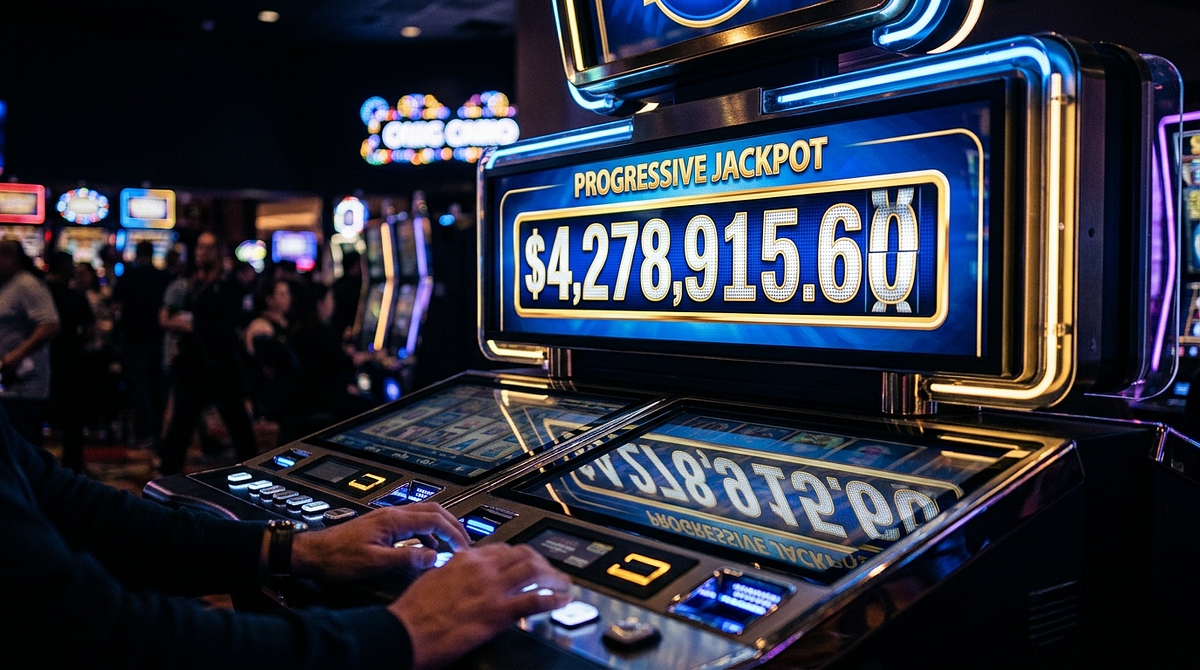
A progressive jackpot is a prize pool that grows over time as players bet on a connected game or network of games, with a small cut of each wager added to the total. This page explains how that growth works: how contributions are calculated, how pooled play across linked games affects the size of the jackpot, the main types of progressive jackpots, and what happens when the jackpot is won and resets. By the end, you’ll have a clear picture of how progressive jackpots work and what sets one type apart from another.
Defining a Progressive Jackpot
A progressive jackpot is a prize pool that keeps rising as players place wagers on a qualifying game, rather than sitting at a fixed amount. Each eligible bet adds to the pool, so the displayed prize climbs continuously until someone wins it. That means the top prize is variable and tied directly to how much play the game is getting. The key difference from a fixed-prize game is simple: with a fixed jackpot, the top payout is set in advance by the game’s paytable and never changes, no matter how many bets have been placed before a win.
How the Prize Pool Grows
A progressive jackpot grows through a contribution system tied directly to gameplay. Every time a player places a qualifying bet, a small percentage of that wager goes into the shared prize pool instead of staying with the operator. So the pool keeps growing as long as bets are being placed. Most progressive games show the current pool value through a visible counter or jackpot meter that updates in near real time. That meter is how players can see exactly how large the prize has grown at any point during play.
The Per-Bet Contribution Mechanism
Every qualifying bet contributes a fixed percentage of its value to the shared prize pool. That contribution comes out of the portion of the wager that would otherwise go to the operator. It’s not added on top of what the player bets. The player always wagers exactly what they put in. The split between operator revenue and jackpot contribution happens internally, based on how the game is built. The contribution rate is fixed by the game’s math and applies the same way to every qualifying bet. Bets that don’t qualify don’t contribute. That usually means bets placed below a minimum stake, or certain bet types within the same game that the rules exclude from jackpot eligibility.
Why Player Activity Accelerates Growth
How fast the prize pool grows comes down to two things: the fixed contribution percentage built into the game, and how many qualifying bets are being placed at any given moment. When more players are actively betting on the same progressive game or network, more contributions flow into the pool per minute, and the jackpot meter climbs faster. When activity drops off, the growth slows down. Because the meter updates in near real time, you can actually watch this happen. The displayed value reflects the pace of qualifying play as it’s happening.
Types of Progressive Jackpots
Progressive jackpots are usually grouped by how wide the contributing player pool is. The narrowest setup draws contributions from a single machine or game instance. A broader setup pools wagers from multiple machines or game sessions within one venue or operator. The widest setup links players across multiple venues or operators into one shared pool. The broader the pool, the faster the jackpot grows and the higher it tends to climb. The trade-off is that the odds of any one player triggering the win get smaller as the pool gets bigger. Understanding how slot volatility affects payout frequency and win size can help you put those odds in context when comparing jackpot types.
Comparison of Jackpot Pool Structures
The table below compares the three common progressive jackpot setups across the same structural dimensions.
Jackpot Type
Player Pool Scope
Typical Growth Speed
Typical Prize Ceiling
Type 1 (single-unit configuration)
Contributions limited to wagers placed on one specific machine or game instance
Slow; depends entirely on activity at that single unit
Lower; commonly in the low four- to five-figure USD range
Type 2 (venue-level network configuration)
Contributions pooled from multiple machines or game sessions within a single venue or operator
Moderate; reflects combined activity across the linked units in that venue or platform
Mid-range; commonly in the five- to low six-figure USD range
Type 3 (multi-venue/wide-area network configuration)
Contributions pooled across multiple venues or operators connected through a shared network
Fast; reflects aggregated activity across all participating sites
High; can reach seven- or eight-figure USD amounts
Winning and Resetting the Jackpot
A progressive jackpot pays out only when a specific, predefined condition is met during gameplay. Until that happens, the prize pool keeps growing through the same contribution system. When the jackpot is finally won, the pool doesn’t drop to zero. Instead, it resets to a base value, often called the seed amount, and starts building again from there. Two mechanics define this stage of the cycle: the trigger condition that releases the prize, and the reset that follows the payout.
Conditions That Trigger a Jackpot Win
The trigger condition is set by the game’s design and varies between titles. In some games, the jackpot pays out when a specific symbol combination lands on an active payline. In others, it’s awarded through a random in-game event tied to a qualifying bet, meaning any spin could theoretically trigger the prize regardless of what shows on screen. A third type requires the player to enter and complete a dedicated bonus feature, where the jackpot is decided through a separate mini-game. Many progressive titles also require a minimum bet, and in some cases a maximum bet, for jackpot eligibility. Betting below that threshold disqualifies an otherwise winning outcome from the progressive prize, even if the symbol or event condition is met. You can learn more about how slot machine symbols like wilds and scatters work on paylines to better understand how symbol-based trigger conditions are structured.
The Seed Amount and the Reset Cycle
Once the jackpot is awarded, the prize pool resets to a predetermined seed amount rather than going back to zero. That seed is funded either by reserves built up during the previous cycle (a portion of contributions set aside specifically for the next reset) or directly by the operator or game provider. The seed value is fixed at the game design level, which is why you almost never see a progressive jackpot sitting at zero after a win. From that base figure, the pool starts growing again through the same contribution system, and the cycle continues until the next player hits the trigger condition.
Understanding a Progressive Jackpot Before You Play
A progressive jackpot is defined by its variable, accumulating prize pool, not by whatever number happens to be showing at a given moment. The per-bet contribution combined with pooled player activity is what sets it apart structurally from a fixed prize. The type of setup, whether single-unit, venue-level, or wide-area, determines how fast it grows and how high it can climb. Refer back to the comparison table when you want to assess the structure of a specific progressive game.
Frequently Asked Questions
How do you win a progressive jackpot?
You win when your qualifying gameplay produces the specific trigger condition tied to the jackpot: a designated symbol combination, a randomly awarded event, or completing a dedicated bonus round. The trigger only counts when your bet meets the qualifying requirement attached to that jackpot.
How are progressive jackpots paid out?
Payout structure varies by jackpot type and by the choices of the operator or game provider. Wide-area network prizes are more commonly paid out in stages or installments than the smaller pools tied to a single machine or single-operator system.
What is the difference between a progressive jackpot and a fixed jackpot?
A progressive jackpot is a variable prize pool that builds over time. A fixed jackpot is a static, predetermined amount that doesn’t change no matter how much is wagered. One figure moves with play; the other is set in advance.
Why do some progressive jackpots grow faster than others?
Growth rate depends on the size of the contributing player pool, the contribution percentage applied to each qualifying bet, and the total wagering volume flowing through the system. Wide-area jackpots linked across multiple operators build faster than local or stand-alone pools because they draw from a much larger base of simultaneous bets.
Does the jackpot reset to zero after it is won?
No, it doesn’t start from scratch. The pool resets to a preset seed amount, so there’s always a baseline prize ready for the next cycle before a single bet is placed. That built-in floor is what keeps things interesting right after a win. It’s worth knowing how a game’s seed value compares before you play, and setting a clear bankroll plan before you start playing can help you approach progressive games with the right financial boundaries in place.